
A CEO recently told us their operations were running smoothly. Reporting was getting done on time. The team was hitting their numbers. Customer satisfaction scores were strong. From the inside, everything was working.
When we asked when anyone outside the organization had last looked at how the work actually flowed through the company, the answer was: never.
Two weeks later, we surfaced four things the leadership team hadn't seen:
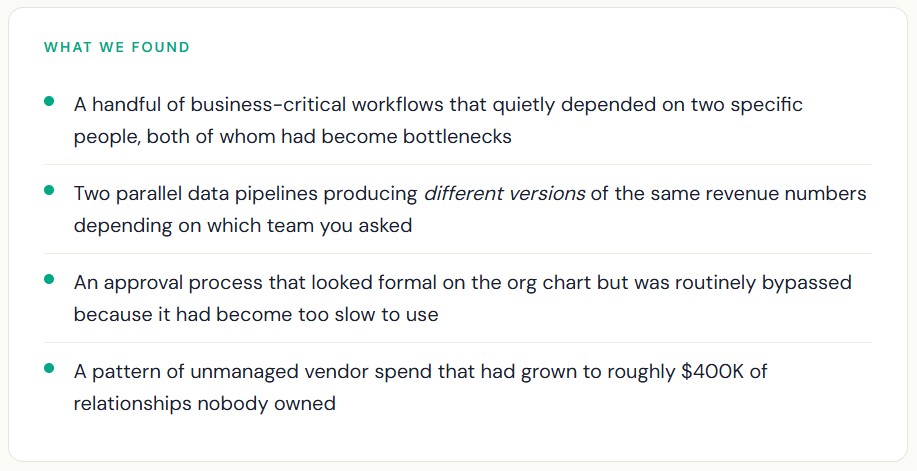
This is the gap between looks fine and is fine. The findings vary. The real issue is the same: nobody could see them.
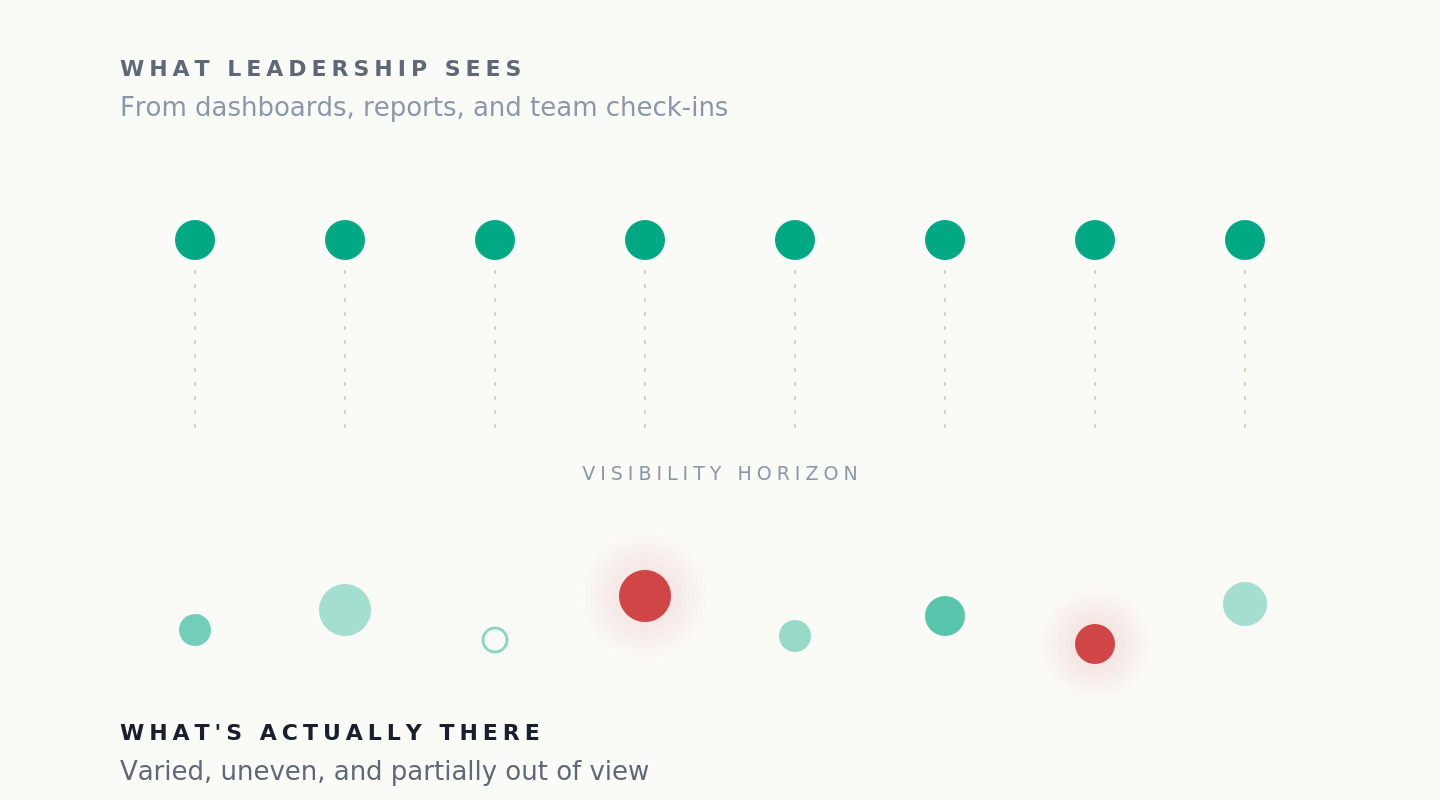
Most environments look like the top row from where leadership stands. Below the visibility horizon, the picture is less even — and a small number of items are larger and more consequential than anyone realized.
It happens almost everywhere we look.
The same dynamic plays out across operations, data, workflows, deployment practices, and AI initiatives. The dashboards look orderly. The weekly numbers don't raise concerns. The team is competent and conscientious. And underneath, quietly, structurally, gaps are accumulating that won't surface until something forces them to.
The AI conversation is making this visible in a way it wasn't before.
Organizations are investing seriously in copilots, automation, and AI-driven workflows. And then they discover the operational ground isn't quite as solid as they thought. Data lives in fifteen disconnected places. Critical workflows depend on three specific people. Reporting works for the metrics anyone asks about, and falls apart for everything else. The AI works fine. The business outcomes don't follow.
What's exposing the gap isn't AI. AI is just what finally puts weight on the floor.
In nearly every modernization engagement we run, four operational gaps surface. They're rarely on a technology roadmap. But they're consistently what determines whether AI delivers.
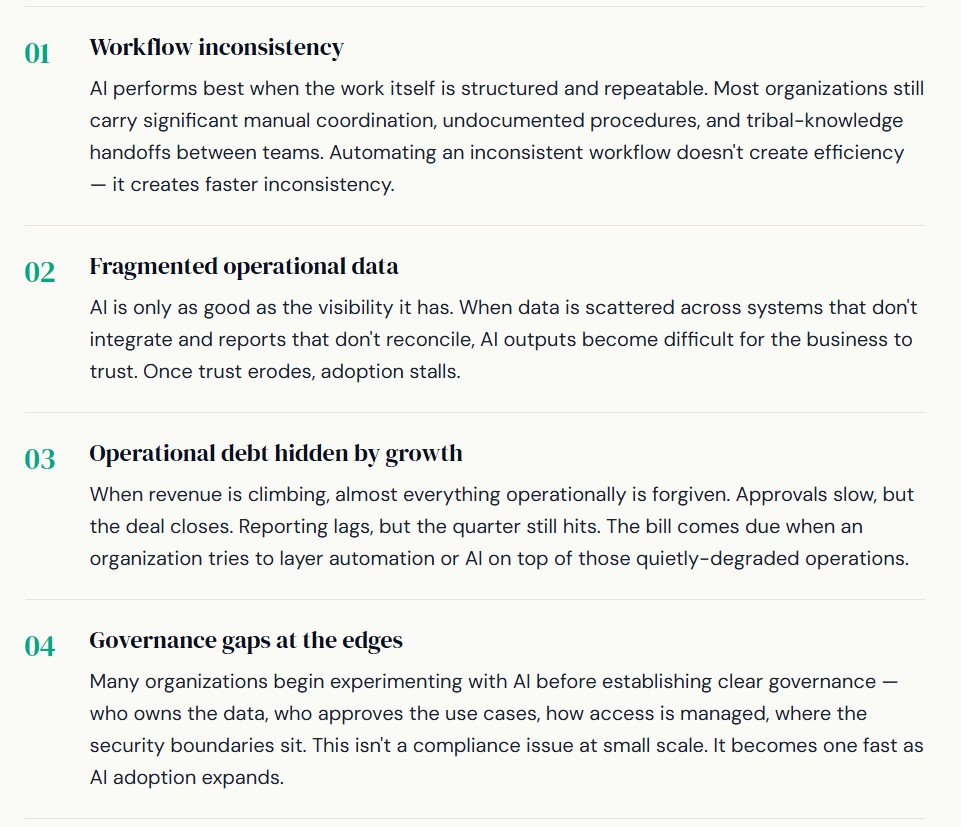
There's a structural reason for this, and it isn't a skills problem.
The people who built the environment are accountable for it. They aren't well-positioned to surface their own blind spots, especially in front of leadership. That's true of even the most senior, most capable teams we work with. It's how organizations function. Fresh eyes see what familiar eyes can't.
It's also why an outside review does something internal recommendations can't. Findings from the team itself compete with a hundred other priorities. Findings from an independent, prioritized review tend to actually move.
This isn't a knock on internal teams. It's the difference between operating something and assessing it.
The organizations that close this gap effectively share a few traits.
They get an objective view of where things stand before big modernization or AI investments. They treat that view as a foundation, not a verdict. Here's where we are, not here's where we failed. They sequence improvements rather than fix everything at once. And they pair internal accountability with outside perspective, so the recommendations actually translate into action.
When we run an operational and modernization assessment — looking at how work flows, where data fragments, what governance has quietly been outgrown — that's the spirit we bring. Not a 200-page audit. Not a finger-pointing exercise. A clear, prioritized view of what's there, what matters most, and what would be useful to do first.
The leadership conversations we like most start with curiosity rather than certainty. We think we're okay. Help us find out. That's the posture that works.
The ones that go badly are the ones where leadership is told everything is fine, right up until something happens that makes clear it wasn't.
We'd rather help organizations have the first conversation.
———
Curious where your environment actually stands? We are here to help.
Partners in your digital transformation.


.png)


